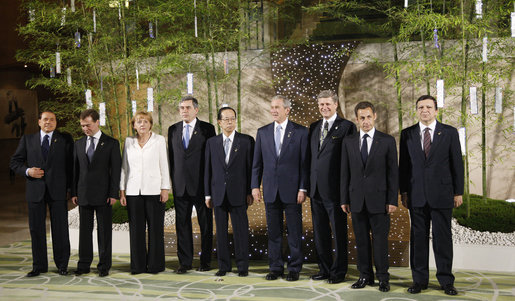
The G8 was never a single-issue forum. Over its four decades of existence, it evolved from a narrow focus on macroeconomic coordination into a broad platform addressing virtually every major global challenge. Understanding its objectives requires looking at both its formal agenda and the informal role it played in international diplomacy.
Economic Coordination
The G8's original purpose, when it was founded in 1975, was to coordinate economic policy among the world's leading industrial nations in the aftermath of the 1973 oil crisis and the collapse of the Bretton Woods fixed exchange rate system. Finance ministers and central bank governors from G8 countries met regularly to discuss monetary policy, exchange rates, trade imbalances and fiscal strategy.
This economic coordination function reached its peak during the 2008–2009 global financial crisis, when G8 (and increasingly G20) coordination was essential to preventing a complete collapse of the international financial system. The commitment to coordinate stimulus packages, strengthen financial regulation and resist protectionism represented the G8 economic process at its most effective.
Global Security and Conflict Prevention
While the UN Security Council remains the primary forum for international security, the G8 provided a smaller, more politically cohesive setting for addressing security challenges. G8 leaders discussed terrorism, nuclear non-proliferation, regional conflicts and cybersecurity. The Global Partnership Against the Spread of Weapons and Materials of Mass Destruction, launched at the 2002 Kananaskis Summit, committed $20 billion to securing nuclear materials — a concrete security achievement that few other forums could have delivered.
Development and Poverty Reduction
From the late 1990s onward, development became a central G8 objective. The 2005 Gleneagles Summit committed to doubling aid to Africa by 2010 and cancelling the multilateral debt of the world's 18 poorest countries. The Heavily Indebted Poor Countries (HIPC) initiative, strongly supported by the G8, provided $76 billion in debt relief.
The G8's Africa Action Plan (2002) and subsequent initiatives created a framework for sustained engagement with the continent, covering governance, education, health and infrastructure. While critics rightly noted that delivery often fell short of pledges, the G8 undeniably placed development at the centre of the global political agenda in a way that no previous forum had achieved.
Climate and Environment
Environmental issues have been on the G8 agenda since the 1989 Paris Summit. The 2007 Heiligendamm Summit saw the G8 acknowledge, for the first time, the scientific evidence for climate change and commit to “seriously considering” cutting emissions by 50% by 2050. While the language was weaker than climate advocates had hoped, it represented a significant shift, particularly given the previous reluctance of the United States under the Bush administration.
Global Health
The G8's health achievements are among its most tangible legacy. The 2000 Okinawa Summit launched the initiative that led to the creation of the Global Fund to Fight AIDS, Tuberculosis and Malaria — which has since saved over 50 million lives. The 2010 Muskoka Initiative mobilised billions for maternal and child health. These commitments demonstrated that when the G8 focused on specific, measurable goals, it could deliver transformative results.
Related Analysis
For more analysis on international governance, explore our articles section.