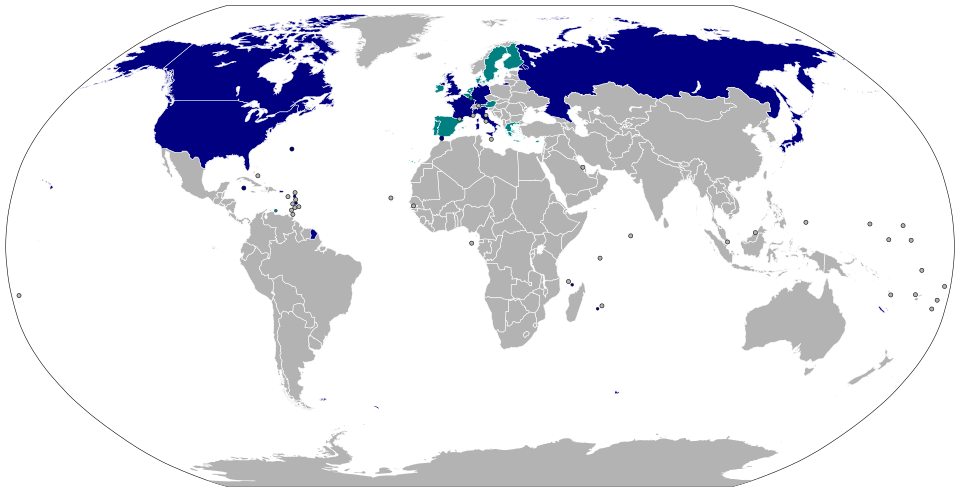
The relationship between the G8 and the G20 is one of the most significant shifts in global governance of the 21st century. Understanding how and why the G20 rose to prominence — and what role the G8 (now G7) continues to play — is essential to grasping the architecture of modern international cooperation.
Membership: 8 vs 20
The most obvious difference is membership. The G8 comprised the world's leading industrialised democracies: France, the United States, the United Kingdom, Germany, Japan, Italy, Canada and Russia (until 2014). The G20 includes all G8 members plus Argentina, Australia, Brazil, China, India, Indonesia, Mexico, Russia, Saudi Arabia, South Korea, South Africa, Türkiye and the European Union.
This expanded membership gives the G20 far greater global representativeness: its members account for approximately 85% of global GDP, 75% of international trade and two-thirds of the world's population. The G8, by contrast, represented primarily the Western industrialised world — a significant limitation in an era when emerging economies drive an increasing share of global growth.
Why the G20 Rose: The 2008 Financial Crisis
The G20 existed as a finance ministers' forum since 1999, but it was the 2008 global financial crisis that catapulted it to leaders' level. When Lehman Brothers collapsed in September 2008, it quickly became clear that the G8 alone could not manage the crisis. The world's emerging economies — particularly China, with its $2 trillion in foreign reserves — were essential to any coordinated response.
In November 2008, US President George W. Bush convened the first G20 leaders' summit in Washington. The London Summit in April 2009, chaired by UK Prime Minister Gordon Brown, produced the most significant coordinated economic response in history: $1.1 trillion in additional resources for the IMF and other international institutions, commitments to fiscal stimulus and a pledge to resist protectionism.
At the Pittsburgh Summit in September 2009, G20 leaders formally designated their forum as “the premier forum for our international economic cooperation” — effectively displacing the G8 from its decades-long position at the centre of global economic governance.
Key Differences at a Glance
| Feature | G8 (now G7) | G20 |
|---|---|---|
| Members | 7–8 nations + EU | 19 nations + EU |
| Share of global GDP | ~45% | ~85% |
| Focus | Political, security, values | Economic, financial, development |
| Cohesion | High (shared democratic values) | Lower (diverse political systems) |
| Decision speed | Faster (fewer members) | Slower (more diverse interests) |
| Legitimacy | Limited (Western-centric) | Broader (global representation) |
Complementary Roles Today
Rather than replacing the G8 entirely, the emergence of the G20 has led to a division of labour. The G7 (as it is now known) focuses on political and security issues where like-minded democracies can act with greater speed and cohesion: responses to Russia's invasion of Ukraine, coordination of sanctions, defence of the rules-based international order and protection of democratic values.
The G20, meanwhile, handles the economic architecture: financial regulation, tax cooperation, debt sustainability for developing countries, digital economy governance and pandemic preparedness. On issues like climate change, both forums play a role, with the G7 often setting ambitious targets that are then negotiated in the broader G20 context.
This complementary model reflects a pragmatic reality: some global challenges require the broad participation that only the G20 can provide, while others benefit from the political cohesion and speed that a smaller group of like-minded nations can offer.
Related Analysis
For more analysis on international governance, explore our articles section.