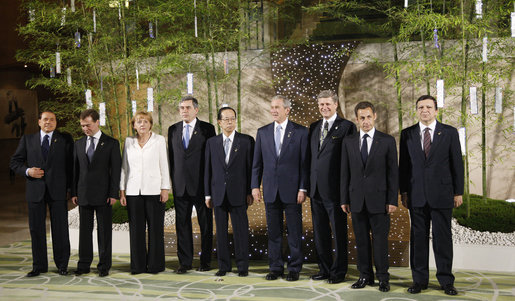
The G8's organisational structure is deliberately informal, reflecting its origins as a fireside chat among leaders of the world's major industrialised democracies. Unlike the United Nations Security Council or the European Commission, there is no permanent bureaucracy, no voting procedures and no binding resolutions. This minimalist architecture has allowed the G8 to be remarkably flexible — but it also means that implementation depends entirely on the political will of member states.
The Rotating Presidency
The presidency of the G8 rotates annually in a fixed order: France, United States, United Kingdom, Russia (suspended since 2014), Germany, Japan, Italy and Canada. The president sets the agenda for the year, chooses the summit location and chairs all leaders' sessions. This gives each member nation a regular opportunity to shape the global conversation.
The presidency is far more than a ceremonial role. The host country typically invests significant diplomatic capital in building consensus on key issues before the summit, conducting bilateral consultations with each member and reaching out to non-G8 nations and international organisations whose cooperation may be needed.
The Sherpa Process
Much of the substantive work of the G8 takes place through the “sherpa” process. Each leader appoints a personal representative — the sherpa — who is typically a senior diplomat or close political adviser. The sherpas meet multiple times throughout the year to negotiate the summit communiqué, resolve disagreements and ensure that leaders arrive at the summit with a clear understanding of what can and cannot be agreed.
Below the sherpas sit “sous-sherpas” (deputy sherpas) who handle specific policy areas, and below them, working groups of officials from relevant ministries. This layered structure means that by the time leaders sit down together, most issues have been thoroughly discussed and many agreements pre-negotiated — allowing the summit itself to focus on the most politically sensitive questions that only heads of state can resolve.
Ministerial Meetings
Throughout the year, ministers from G8 countries meet in their respective policy areas. The most established formats are the Finance Ministers and Central Bank Governors' meetings (which predate the leaders' summits), the Foreign Ministers' meetings and the Environment Ministers' meetings. In recent years, meetings of Health, Science, Digital and Labour ministers have been added, reflecting the expanding scope of G8 coordination.
These ministerial processes produce their own communiqués and commitments, which feed into the leaders' summit agenda. They also provide a channel for ongoing coordination between summits, ensuring that the G8 functions as a continuous process rather than a single annual event.
Engagement Groups
Since the mid-2000s, the G8 has developed a system of “engagement groups” that bring together representatives from business (B8), civil society (C8), labour (L8), think tanks (T8), women (W8) and youth (Y8). These groups provide structured input into the summit process, typically presenting recommendations to the presidency and participating in official side events.
For more analysis on international governance, explore our articles section.