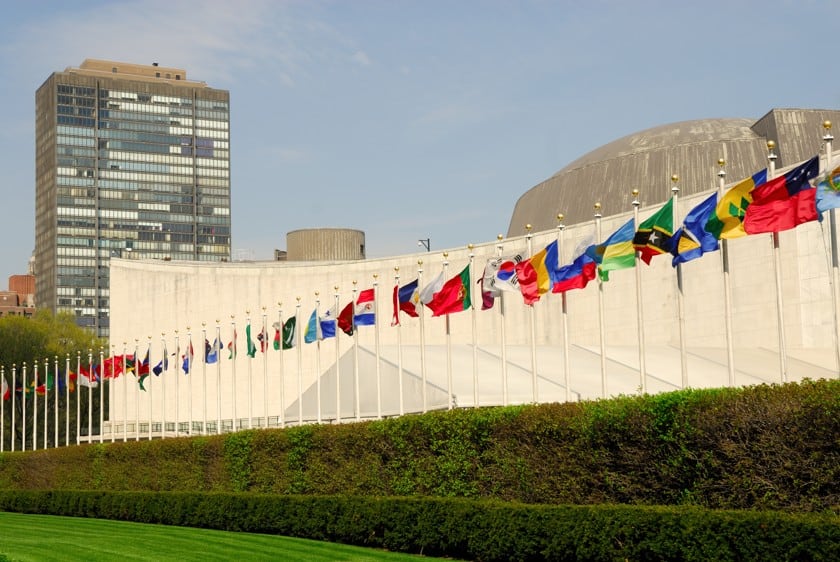
The story of global governance is the story of humanity's attempts to manage its common affairs through cooperation rather than conflict. While the modern system of international institutions dates primarily from the mid-twentieth century, its roots reach back centuries to the earliest experiments in multilateral diplomacy.
Early Foundations: The Concert of Europe (1815–1914)
The modern concept of international governance began with the Congress of Vienna in 1815, when the great powers of Europe — Britain, Austria, Prussia, Russia and later France — established the Concert of Europe. This system of regular consultations among major powers managed to prevent a general European war for nearly a century, establishing the principle that great powers had a collective responsibility for international order.
The nineteenth century also saw the creation of the first permanent international organisations: the International Telegraph Union (1865), the Universal Postal Union (1874), and the International Committee of the Red Cross (1863). These technical organisations demonstrated that states could cooperate through permanent institutions on specific functional issues.
The League of Nations (1920–1946)
The catastrophe of World War I convinced many that a more formal system of collective security was needed. The League of Nations, created in 1920 under the Treaty of Versailles, represented the first attempt at a comprehensive international organisation with a mandate to maintain peace. However, the League was fatally weakened by the absence of the United States, the withdrawal of Japan and Germany, and its inability to prevent aggression by major powers in the 1930s.
Despite its failures in collective security, the League established important precedents: the principle of universal membership, the mandate system for colonial territories, and specialised agencies for health, labour and intellectual cooperation that would later be incorporated into the UN system.
The Post-War Order (1945–1989)
The end of World War II produced the most ambitious project of institutional design in history. The United Nations, the International Monetary Fund, the World Bank, and the General Agreement on Tariffs and Trade were created in rapid succession between 1944 and 1947, establishing an interconnected system of global governance covering security, finance, development and trade.
The Cold War profoundly shaped this system. The UN Security Council was paralysed by the US-Soviet rivalry, leading to the development of peacekeeping as an improvised alternative to the Charter's collective security provisions. Economic governance was split between the Western Bretton Woods system and the Soviet-led Council for Mutual Economic Assistance (COMECON). Regional organisations — NATO, the Warsaw Pact, the European Economic Community — emerged as Cold War instruments.
Meanwhile, decolonisation transformed the UN General Assembly, as newly independent states demanded a “New International Economic Order” and used their numerical majority to challenge Western dominance of international institutions.
The Post-Cold War Expansion (1989–2008)
The end of the Cold War unleashed an extraordinary expansion of global governance. The WTO replaced the GATT with a more powerful dispute resolution mechanism. The International Criminal Court was established. The G8 expanded its agenda from economics to include development, health and climate. The Kyoto Protocol represented the first binding multilateral agreement on climate change.
This period saw an explosion of non-state governance: the rise of global NGOs, public-private partnerships like the Global Fund and GAVI, corporate social responsibility standards, and multistakeholder governance models for the internet (ICANN, the Internet Governance Forum).
The Current Era: Crisis and Adaptation (2008–Present)
The 2008 financial crisis marked a turning point, demonstrating that the existing institutional architecture was insufficient. The G20 was elevated to leaders' level as the premier forum for economic cooperation. The Paris Agreement adopted a bottom-up approach to climate governance through nationally determined contributions.
Today, global governance faces a period of profound challenge and transformation, driven by great power competition, digital disruption, and the growing gap between transnational problems and national politics. For more on these dynamics, see our analysis of contemporary governance challenges.
Related Analysis
For more analysis on international governance, explore our articles section.