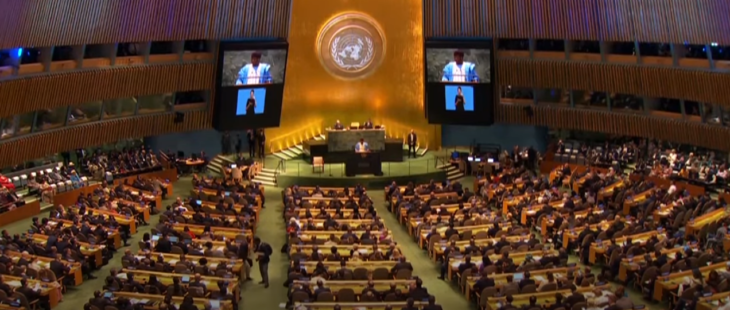
Global governance refers to the complex web of institutions, rules, norms and practices through which states and other actors manage shared problems that no single country can solve alone. From climate change to financial regulation, from pandemic response to nuclear non-proliferation, global governance provides the frameworks for collective action in an interconnected world.
Unlike domestic governance, global governance operates without a world government. Instead, it relies on a mosaic of international organisations, treaties, informal forums like the G8 and G20, non-governmental organisations, and increasingly, multi-stakeholder partnerships that bring together governments, businesses and civil society.
The Architecture of Global Governance
The modern global governance system was built largely in the aftermath of World War II, when the United Nations, the International Monetary Fund, the World Bank and the General Agreement on Tariffs and Trade (GATT, later the WTO) were created. These institutions embodied the conviction that international cooperation through permanent multilateral organisations could prevent the catastrophic failures of the interwar period.
Over the decades, this architecture has expanded enormously. Today it includes hundreds of international organisations, thousands of treaties, and informal forums at every level — from the G20's elaborate working group system to bilateral investment treaties between individual states.
Formal and Informal Governance
A key distinction in global governance is between formal institutions with legal personality, binding decision-making power and permanent secretariats (like the UN, WTO and ICC) and informal forums that operate through political commitments rather than legal obligations (like the G8 and G20).
Both types play essential roles. Formal institutions provide legal certainty, dispute resolution mechanisms and institutional memory. Informal forums offer flexibility, speed and the ability to address issues that cut across institutional boundaries. The evolution from G8 to G20 illustrates how informal governance adapts to shifting power dynamics.
Key Areas of Global Governance
Global governance spans virtually every area of human activity that crosses national borders: trade and finance, security and peacekeeping, human rights, environmental protection, health, migration, digital governance, space and oceans. For a detailed look at the institutional landscape, see our guide to global governance institutions.
The effectiveness of global governance varies enormously by issue area. Trade governance through the WTO, while imperfect, has created a rules-based system that has supported decades of trade expansion. Climate governance has struggled with collective action problems but achieved a breakthrough with the Paris Agreement. Health governance was severely tested by COVID-19, revealing both strengths and critical gaps.
To understand how these governance challenges have evolved over time, explore the history of global governance. For current policy debates, see our analysis of contemporary governance challenges and the future of global governance.
Frequently Asked Questions
What is global governance?
Global governance refers to the system of international institutions, treaties, norms and practices through which states and other actors cooperate to manage transnational challenges. Unlike domestic governance, it operates without a central authority, relying instead on multilateral organisations (UN, WTO, IMF), informal forums (G7, G20), treaties and multi-stakeholder partnerships.
What are the main institutions of global governance?
The core institutions include the United Nations (peace and security, human rights), the International Monetary Fund (financial stability), the World Bank (development), the World Trade Organization (trade rules), and the World Health Organization (global health). Informal forums like the G7/G8 and G20 complement these by providing political leadership on economic and security issues.
How does global governance differ from world government?
Global governance is not world government. There is no single authority with sovereignty over all states. Instead, governance emerges from a patchwork of institutions, agreements and norms that states voluntarily participate in. States retain sovereignty but agree to coordinate on shared challenges through international cooperation frameworks.
Why is global governance important?
Many of the most pressing challenges facing humanity — climate change, pandemics, financial crises, nuclear proliferation, migration, cybersecurity — cannot be solved by any single country. Global governance provides the frameworks for collective action, enabling coordinated responses that would be impossible through unilateral national policies alone.
What are the biggest challenges to global governance today?
Key challenges include: the rise of great power competition (US-China tensions), democratic backsliding in many countries, the growing influence of non-state actors (tech companies, NGOs), the inadequacy of existing institutions to address new threats (AI governance, space governance), and persistent legitimacy deficits in institutions that underrepresent developing nations.
Related Analysis
For more analysis on international governance, explore our articles section.