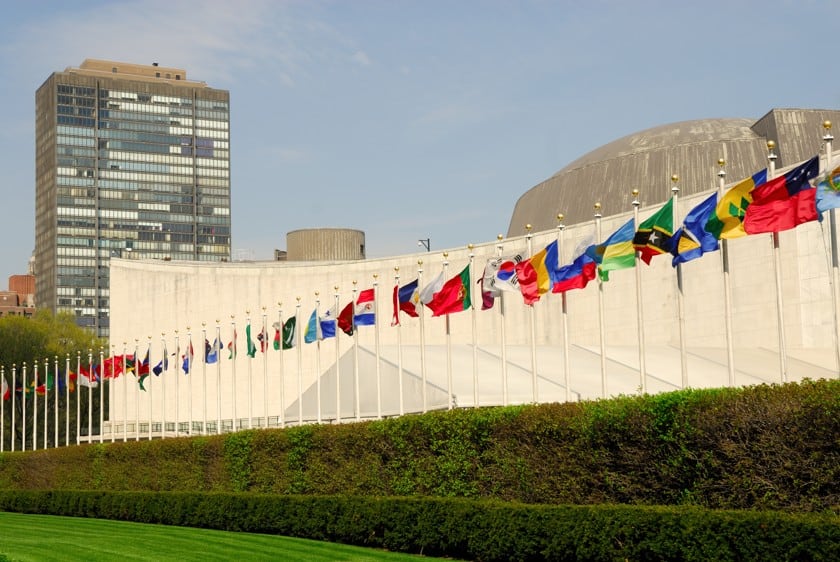
The international system comprises hundreds of organisations, forums and mechanisms that collectively form the architecture of global governance. Understanding this landscape is essential for grasping how international cooperation actually works — and where it falls short.
The United Nations System
The UN remains the centrepiece of global governance. Its principal organs — the General Assembly (193 members, one vote each), the Security Council (5 permanent members with veto power plus 10 elected), the Economic and Social Council, the International Court of Justice, and the Secretariat — address the full spectrum of international issues.
The UN's specialised agencies form a vast network: the World Health Organization (WHO), the Food and Agriculture Organization (FAO), UNESCO, the International Labour Organization (ILO), the International Atomic Energy Agency (IAEA) and many others. These agencies have their own membership, governance structures and budgets, but coordinate under the UN umbrella.
The Bretton Woods Institutions
The International Monetary Fund (IMF) and the World Bank Group, created at the 1944 Bretton Woods conference, remain central to global economic governance. The IMF provides financial stability surveillance, technical assistance and emergency lending, with voting power weighted by economic size. The World Bank Group provides development financing and expertise to developing countries.
Both institutions have been criticised for governance structures that overrepresent Western countries and for the conditions they attach to lending. Reform efforts, including the 2010 quota reform that increased the voice of emerging economies, have been slow and contentious.
The World Trade Organization
The WTO, established in 1995 as successor to the GATT, is the only international organisation with a binding dispute settlement mechanism covering trade in goods, services and intellectual property. Its 164 members negotiate trade rules on a consensus basis. However, the Doha Development Round launched in 2001 remains largely stalled, and the appellate body of the dispute settlement system was rendered non-functional in 2019 due to US blocking of judge appointments.
Informal Forums: G7/G8 and G20
The G8 (now G7 after Russia's suspension in 2014) and the G20 represent a different model of governance: informal, leader-driven, without permanent institutions or binding authority. Despite this — or perhaps because of it — they have often been more effective at catalysing action than formal institutions, particularly during crises.
The G20's elevation in 2008 reflected the reality that the G8 alone could not manage a global financial crisis requiring the participation of China, India, Brazil and other emerging economies. Today, the G20's elaborate structure of working groups and engagement groups resembles a permanent institution in all but name. The differences between G8 and G20 illuminate broader debates about legitimacy and effectiveness in global governance.
Regional Organisations
Regional governance has become increasingly important. The European Union represents the most advanced experiment in regional integration, with supranational institutions and binding law. The African Union, ASEAN, Mercosur, the Gulf Cooperation Council and others provide governance at the regional level, often more effectively than global institutions on certain issues.
Non-State Governance Actors
The governance landscape increasingly includes non-state actors: international NGOs (Amnesty International, Médecins Sans Frontières), public-private partnerships (the Global Fund, GAVI), industry standard-setting bodies (ISO, ICANN), philanthropic foundations (Gates Foundation) and even cities (C40 Cities network). These actors fill governance gaps, provide expertise and accountability, and sometimes wield more influence than many states.
Related Analysis
For more analysis on international governance, explore our articles section.