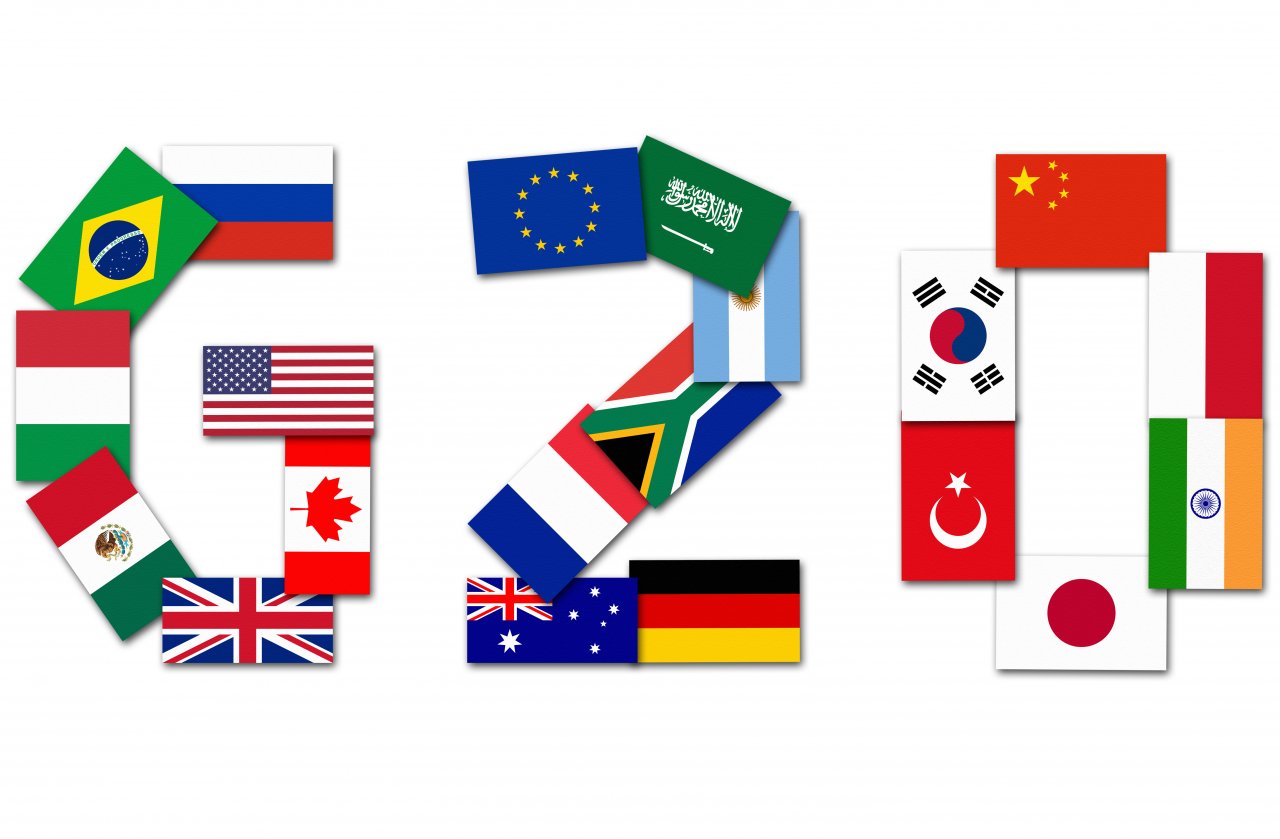
The Group of Twenty — the G20 — is the premier forum for international economic cooperation. Representing approximately 85% of global GDP, 75% of international trade and two-thirds of the world's population, the G20 brings together the world's major advanced and emerging economies to address the most pressing challenges of the global financial system.
Unlike the G8, which represented primarily Western industrialised democracies, the G20 includes major developing nations such as China, India, Brazil and Indonesia, giving it far greater global legitimacy and economic representativeness.
History of the G20
The G20 was established in 1999 in the aftermath of the Asian financial crisis, initially as a forum for finance ministers and central bank governors. For nearly a decade, it operated in relative obscurity, meeting annually to discuss financial regulation, tax policy and economic stability.
Everything changed in September 2008 when the collapse of Lehman Brothers triggered the worst global financial crisis since the Great Depression. It became immediately clear that the G8 alone could not manage a crisis of this magnitude — the world's emerging economies, particularly China with its $2 trillion in foreign reserves, were essential to any coordinated response.
In November 2008, US President George W. Bush convened the first G20 leaders' summit in Washington. The London Summit of April 2009, chaired by UK Prime Minister Gordon Brown, produced the most significant coordinated economic response in history: $1.1 trillion in additional resources for the IMF and World Bank, commitments to fiscal stimulus totalling over $5 trillion, and a pledge to resist protectionism.
At the Pittsburgh Summit in September 2009, G20 leaders formally designated their forum as “the premier forum for our international economic cooperation” — effectively replacing the G8 as the centre of global economic governance. This transition is explored in detail in our G8 vs G20 comparison.
How the G20 Works Today
The G20 operates on an annual cycle, with the presidency rotating among members divided into five regional groups. The host country sets the agenda, organises the leaders' summit (typically held in November) and chairs all meetings throughout the year.
The G20 process involves multiple tracks: finance ministers and central bank governors meet quarterly, while working groups on specific topics (digital economy, climate, health, anti-corruption) meet throughout the year. Since 2010, engagement groups representing business (B20), civil society (C20), labour (L20), think tanks (T20), women (W20), youth (Y20) and science (S20) provide structured input.
For a detailed look at the institutional architecture, see our guide to G20 structure and decision-making.
The G20's Global Impact
The G20 has driven significant reforms in global economic governance. The Basel III banking regulations, the automatic exchange of tax information (AEOI), the OECD/G20 Base Erosion and Profit Shifting (BEPS) framework, and the Common Framework for Debt Treatment of developing countries all originated in G20 processes.
During the COVID-19 pandemic, the G20 coordinated the Debt Service Suspension Initiative (DSSI) for the world's poorest countries, pledged over $14 billion for vaccine access through COVAX, and agreed on a historic global minimum corporate tax of 15%. These achievements demonstrate that on economic issues requiring broad global participation, the G20 has become indispensable.
For the complete list of participating nations, see G20 member countries. To understand the forum's key policy priorities, read about G20 objectives and achievements.
G20 Timeline
Frequently Asked Questions
What is the G20?
The G20 (Group of Twenty) is the premier international forum for economic cooperation, bringing together 19 countries plus the European Union. Its members represent approximately 85% of global GDP. Established as a finance ministers' forum in 1999, it was elevated to leaders' level in 2008 during the global financial crisis.
How many countries are in the G20?
The G20 comprises 19 individual countries — Argentina, Australia, Brazil, Canada, China, France, Germany, India, Indonesia, Italy, Japan, Mexico, Russia, Saudi Arabia, South Africa, South Korea, Türkiye, the United Kingdom and the United States — plus the European Union as the 20th member.
What is the role of the G20?
The G20 coordinates global economic policy, financial regulation, trade, development, climate action and health. Its key achievements include coordinating the response to the 2008 financial crisis, establishing Basel III banking rules, creating the global minimum corporate tax, and mobilising COVID-19 vaccine funding through COVAX.
How is the G20 different from the G8?
The G8 comprised 8 Western industrialised democracies and focused on political and security issues. The G20 includes 19 nations plus the EU, covering both advanced and emerging economies, with a primary focus on economic and financial governance. The G20 represents approximately 85% of global GDP versus the G8's roughly 45%.
Does the G20 make binding decisions?
No. Like the G8, the G20 operates through consensus and issues political commitments rather than legally binding treaties. However, G20 commitments carry significant weight because they represent the collective will of economies accounting for 85% of global GDP, and are typically implemented through existing international institutions like the IMF, World Bank and OECD.
Related Analysis
The G20 operates within a broader system of international cooperation. Explore our comprehensive guide to global governance and learn about the key challenges facing multilateral institutions today.
For more analysis on international governance, explore our articles section.