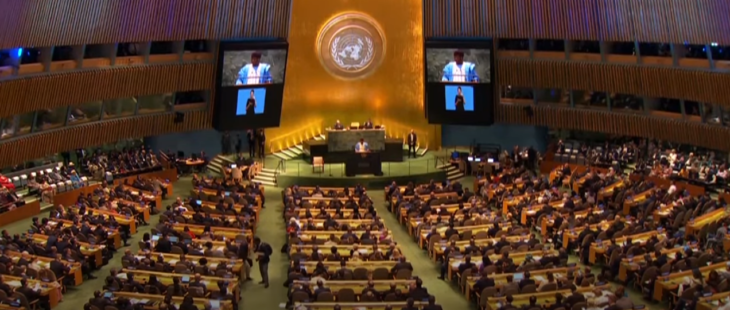
The system of global governance is at a crossroads. The institutions built in the twentieth century are struggling to address twenty-first century challenges, yet comprehensive reform remains politically impossible. What emerges instead is a more complex, fragmented and multipolar governance landscape — one that demands new thinking about how international cooperation can work in an era of great power competition, digital transformation and planetary crisis.
Reforming Existing Institutions
The most ambitious reform proposal — expanding the UN Security Council to include permanent representation for Africa, Latin America, South Asia and additional European and Asian states — has been debated for decades without resolution. The G4 proposal (Germany, Japan, India, Brazil) and the African Union's Ezulwini Consensus represent competing visions, but both face opposition from countries that would lose relative influence.
More pragmatic reforms are possible: expanding qualified majority voting in the IMF and World Bank, reforming WTO dispute settlement, strengthening WHO's pandemic preparedness authority (as proposed after COVID-19), and improving the transparency and accountability of all international institutions. These incremental changes may achieve what comprehensive reform cannot.
The Rise of Plurilateral Governance
Increasingly, governance innovation happens through “coalitions of the willing” rather than universal institutions. The G20 itself began this way — a self-selected group of major economies that proved more effective than the universal UN system for economic governance. The pattern is spreading: the Quadrilateral Security Dialogue (Quad), AUKUS, the Indo-Pacific Economic Framework, and sectoral agreements on issues from digital trade to methane emissions.
This “minilateral” approach has the advantage of speed and flexibility — smaller groups can reach agreement more quickly. But it risks creating a two-tier system in which major powers set rules that smaller states must follow without meaningful input. The tension between effectiveness and legitimacy that characterises the G8-to-G20 transition will define much of twenty-first century governance.
Networked Governance and Multi-Stakeholder Models
The future of governance may not look like traditional intergovernmental institutions at all. The internet governance model — with technical standards set by engineers (IETF), domain names managed by a multistakeholder body (ICANN), and policy coordination through the Internet Governance Forum — offers an alternative template.
Multi-stakeholder governance is expanding into new areas: the Global Partnership on Artificial Intelligence (GPAI), the Christchurch Call against online extremism, the Paris Call for Trust and Security in Cyberspace. These initiatives bring together governments, companies, civil society and technical experts in governance arrangements that transcend the state-centric model.
Technology as a Governance Tool
Technology itself is becoming a governance tool. Satellite monitoring enables verification of climate commitments. Blockchain-based systems could improve transparency in aid delivery and supply chain governance. AI-powered analysis can help identify treaty violations and governance gaps. Digital platforms enable broader public participation in governance processes.
However, technology also creates governance challenges. The concentration of technological power in a handful of companies raises questions about accountability. Surveillance technologies can undermine the human rights norms that governance institutions were created to protect. And the digital divide risks excluding the populations most affected by governance decisions.
Scenarios for 2030 and Beyond
Three broad scenarios capture the range of possible futures for global governance:
Fragmentation: Great power competition produces parallel governance systems — a Western-led order and a China-centred alternative, with many countries navigating between them. Multilateral institutions weaken as competing powers use them as arenas for rivalry rather than cooperation.
Adaptation: Existing institutions reform incrementally, supplemented by flexible coalitions and multi-stakeholder arrangements. Governance becomes more complex and less coherent, but continues to function on most issues. This is arguably the most likely scenario, and it is the path the G20's evolving mandate suggests.
Renewal: A major crisis — pandemic, climate emergency, financial collapse or conflict — creates the political will for comprehensive institutional reform, much as World War II produced the current system. The history of global governance shows that institutional innovation tends to follow catastrophe.
Whatever scenario unfolds, the fundamental challenge remains: how to create governance mechanisms that are effective enough to address shared challenges, legitimate enough to command public support, and flexible enough to adapt to a rapidly changing world. The answer will likely involve not a single institutional model, but a layered system of global, regional, plurilateral and multi-stakeholder governance working in imperfect coordination.
Related Analysis
For more analysis on international governance, explore our articles section.