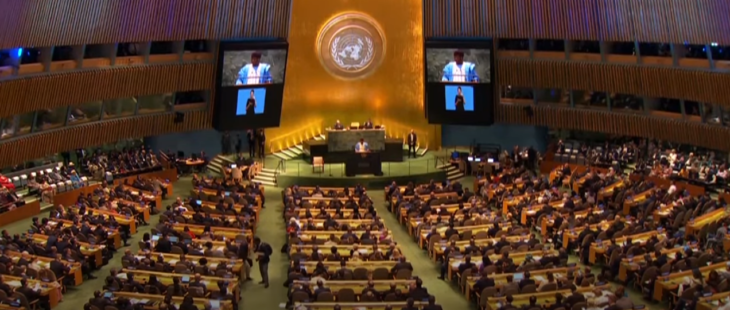
Multilateralism is the practice of coordinating policies and actions among three or more states through international institutions, treaties and norms. It is the foundational principle of the post-1945 international order — the idea that shared problems require collective solutions, and that states benefit from cooperating within agreed-upon rules rather than acting unilaterally.
From the United Nations to the G20, from the World Trade Organization to the Paris Agreement, multilateral institutions and processes shape virtually every aspect of international relations. Yet multilateralism faces unprecedented challenges in the twenty-first century, from great power competition to populist backlash against international cooperation.
Defining Multilateralism
The political scientist John Ruggie defined multilateralism as “an institutional form that coordinates relations among three or more states on the basis of generalised principles of conduct.” Three elements distinguish multilateralism from other forms of international cooperation:
- Indivisibility: The benefits and costs apply to all members collectively, not bilaterally. NATO's Article 5 (an attack on one is an attack on all) is the classic example.
- Generalised principles: Rules apply equally to all participants, regardless of their particular interests or power. The WTO's most-favoured-nation principle embodies this.
- Diffuse reciprocity: Members accept short-term costs in exchange for long-term collective benefits, trusting that others will do the same. Climate commitments exemplify this logic.
A Brief History of Multilateralism
Modern multilateralism emerged from the catastrophes of the twentieth century. After World War I, the League of Nations represented the first attempt at a comprehensive multilateral organisation. Its failure to prevent World War II led to the creation of a more robust system centered on the United Nations (1945), the Bretton Woods institutions (IMF and World Bank, 1944), and the General Agreement on Tariffs and Trade (1947).
During the Cold War, multilateralism operated primarily within the Western bloc, with the US-led system of alliances, trade agreements and international institutions creating what scholars call the “liberal international order.” The end of the Cold War expanded this system globally, with the creation of the WTO (1995), the International Criminal Court (2002), and the elevation of the G20 to leaders' level (2008).
For a detailed chronological account, see our history of global governance.
Key Multilateral Institutions
The multilateral system comprises several layers of institutions:
Universal Institutions
The United Nations is the most universal multilateral organisation, with 193 member states. Its Security Council (5 permanent members with veto power plus 10 elected) addresses peace and security, while specialised agencies (WHO, UNESCO, FAO, ILO) cover specific functional areas. The World Trade Organization (164 members) provides binding rules for international trade.
Financial Institutions
The International Monetary Fund and the World Bank Group coordinate international monetary policy, financial stability and development financing. Both use weighted voting systems that reflect economic size, giving major economies greater influence.
Informal Forums
The G8 (now G7) and the G20 represent informal multilateralism — cooperation without permanent institutions, binding rules or universal membership. Despite these limitations, they have often been more effective than formal institutions at catalysing rapid policy responses, particularly during the 2008 financial crisis. The evolution from G8 to G20 illustrates how informal multilateralism adapts to shifting power dynamics.
Regional Organisations
The European Union, African Union, ASEAN and other regional organisations represent multilateralism at a sub-global scale. The EU is the most advanced example, with supranational institutions that can make binding law directly applicable in member states.
For a comprehensive mapping of these institutions, see our guide to global governance institutions.
Multilateralism Under Pressure
The multilateral system faces several interconnected challenges:
Great power competition. The US-China rivalry threatens to fragment the multilateral system into competing blocs. China has created parallel institutions (AIIB, Belt and Road Initiative) while seeking greater influence within existing ones. Russia's suspension from the G8 after the annexation of Crimea demonstrated that norm violations carry institutional consequences.
Legitimacy deficits. Many multilateral institutions underrepresent developing nations. The UN Security Council reflects the power structure of 1945, not 2026. The IMF and World Bank remain dominated by their Western founders despite the economic rise of Asia. This fuels perceptions of unfairness and reduces buy-in from emerging powers.
Populist backlash. In many democracies, voters view multilateral commitments as constraints on national sovereignty. Brexit, the US withdrawal from the Paris Agreement (2017), hostility to the WTO and ICC, and scepticism toward international organisations reflect a broader crisis of legitimacy for the multilateral project.
New challenges outpacing institutions. AI governance, cybersecurity, space governance, pandemic preparedness and climate change all require multilateral responses that existing institutions were not designed to provide. The speed of technological change outpaces the pace of institutional adaptation.
For a deeper analysis, see our guide to challenges to global governance.
The Future of Multilateralism
Despite the challenges, multilateralism remains indispensable. Climate change, pandemics, financial crises, nuclear proliferation and AI governance cannot be addressed through unilateral national action. The question is not whether multilateralism will survive, but what form it will take.
Several trends are reshaping multilateral cooperation:
- Plurilateral agreements among “coalitions of the willing” are supplementing universal institutions where consensus is impossible.
- Multi-stakeholder governance increasingly involves businesses, NGOs, cities and technical communities alongside states.
- Digital tools enable broader participation and transparency in multilateral processes.
- Regional integration provides governance capacity where global institutions cannot reach.
The future of global governance will likely involve a more complex, layered system rather than a return to the relatively simple institutional architecture of the post-1945 era. Whether this complexity produces effective cooperation or institutional fragmentation remains the central question of twenty-first century international relations.
Related Analysis
For more analysis on international governance, explore our articles section.